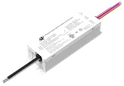


In an era where grid reliability and equipment compatibility are paramount, the American National Standards Institute (ANSI) standards serve as the cornerstone of power infrastructure-from circuit breakers in data centers to renewable integration. For global players navigating the U.S. market, mastering ANSI compliance is not optional; it's strategic.
1. Why ANSI Standards Matter: Beyond Compliance
ANSI standards transcend mere regulatory checkboxes. They are engineering blueprints for safety, performance, and interoperability, rigorously tested to withstand real-world extremes. Consider their core functions:
Safety Assurance: ANSI/IEEE C37.20.1 mandates structural integrity tests for metal-enclosed low-voltage circuit breakers, including dielectric withstand voltage and temperature rise limits, preventing failures in high-fault scenarios.
Performance Benchmarking: Standards like ANSI C37.51 define testing protocols for switchgear components, ensuring consistent operation under short-circuit currents up to 200kA.
Interoperability: By standardizing dimensions, ratings, and control circuits (e.g., continuous current ratings of 1600A–12,000A for DC systems), ANSI enables seamless integration across vendors.
Case in point: A 2024 U.S. grid upgrade project avoided $2M in retrofit costs by using ANSI-compliant breakers from multiple suppliers-a testament to standardized design.
2. Key ANSI Standards for Power Equipment
2.1 Core Standards for Switchgear & Circuit Breakers
ANSI/IEEE C37.20.1:
Governs metal-enclosed low-voltage power circuit breakers (up to 1000V AC/3200V DC).
2020 revision added control circuit safety requirements, crucial for AI-driven data centers with complex backup systems.
UL 1558:
Certifies ANSI C37.20.1 compliance, with added fire-resistance tests-non-negotiable for U.S. building codes.
ANSI C37.51:
Specifies type tests for circuit breaker components, including mechanical endurance (e.g., 10,000 operations) and environmental resilience (salt spray, humidity).
2.2 Beyond Breakers: Coverage Across Power Systems
| Application | Standard | Focus |
|---|---|---|
| Motor Control | ANSI/UL 845 | Overload protection, NEMA ICS1-3 alignment |
| Distribution Boards | ANSI/UL 891 | Front-access safety, arc-flash mitigation |
| Busways | UL 857 + NEMA BU1 | Current-carrying capacity, seismic rating |
3. ANSI vs. IEC: Bridging the Atlantic Divide
While IEC standards cater to global versatility, ANSI prioritizes precision and regional specificity:
Structural Rigidity: ANSI prescribes exact material thicknesses and clearances (e.g., 18mm creepage distance for 480V systems), whereas IEC allows design flexibility.
Grid Architecture: ANSI assumes a unified grounding system (NEC-aligned), while IEC accommodates diverse earthing schemes (TT, TN-S).
Certification Costs: UL/CSA audits add 15–20% to ANSI compliance costs-a critical ROI factor for exporters.
Strategic Tip: Hybrid projects (e.g., U.S. solar farms with European inverters) require dual-standard components. Hydget's ANSI-IEC transition kits resolve compatibility gaps with adaptive busbars.
4. The Business Case: ANSI Compliance as a Market Accelerator
Faster Market Entry: UL certification based on ANSI standards cuts approval time by 40% vs. custom validations.
Risk Mitigation: Non-compliant equipment faces 30% higher insurance premiums and liability lawsuits (e.g., 2023 Texas arc-flash incident).
Policy Incentives: Biden's $300B grid modernization fund prioritizes ANSI-compliant gear-leveraged by savvy suppliers.
5. Future-Proofing with ANSI: Smart Grids and Sustainability
ANSI standards are evolving to embrace digitalization and decarbonization:
IoT Integration:
ANSI C37.1-2024 now supports sensor-based condition monitoring (partial discharge, thermal imaging), enabling predictive maintenance.
Green Standards:
Upcoming ANSI C37.20.1 revisions will mandate recyclable enclosures (≥85% recovery rate) and SF6-free insulation.
Grid-Forming Capabilities:
IEEE 1547-2028 (ANSI-aligned) will require inverters to stabilize microgrids during blackouts-critical for renewable-heavy networks.
Conclusion: ANSI as Your Passport to the U.S. Power Market
For global manufacturers, ANSI standards are more than technical mandates-they are competitive enablers. By embedding ANSI compliance into your design DNA, you unlock reliability, reduce risks, and align with America's energy transition. At Hydget, we help clients navigate this landscape with ANSI-optimized circuit breakers, UL-certified switchgear, and future-ready grid interfaces.
Ready to conquer the U.S. market?
→ Explore Hydget's ANSI-Compliant Solutions | Download U.S. Grid Compliance Guide