
LED Street Light Revolution: Technological Evolution and Energy Efficiency Strategies | Hydget
LED Street Light Revolution: Technological Evolution and Energy Efficiency Strategies
How Advanced Materials, Smart Controls, and Solar Integration Are Transforming Urban Lighting
The global transition to LED street lighting represents one of the most significant energy efficiency achievements of the past decade. With cities worldwide replacing traditional high-pressure sodium lamps, LED technology now illuminates over 60% of urban roadways, delivering energy savings exceeding 60% while extending operational lifespans by 300-500%. This technological revolution extends beyond simple bulb replacement, encompassing material science breakthroughs, intelligent control systems, and renewable energy integration that collectively redefine urban lighting infrastructure.
Market Insight: The global LED street light market is projected to reach $28.4 billion by 2028, driven by municipal energy reduction targets and smart city initiatives. Cities implementing full LED conversions report 25-30% reduction in municipal electricity budgets.
Core Technological Advancements
Semiconductor Materials Revolution
The evolution from first-generation gallium arsenide phosphide (GaAsP) LEDs to current gallium nitride (GaN) based systems has enabled unprecedented efficiency gains:
GaN-on-SiC Technology
Silicon carbide substrates enable higher thermal conductivity (490 W/m·K), allowing junction temperatures below 85°C at 200W output
Quantum Dot Enhancement
Cd-free quantum dots convert blue LED emission to precise white spectra, achieving 98 CRI for improved color recognition
These material innovations have pushed commercial LED efficacy from 80 lm/W to 220 lm/W in laboratory settings, with 150-170 lm/W now standard in premium street lighting fixtures. The latest aluminum indium gallium phosphide (AlGaInP) red-orange emitters complete the visible spectrum, enabling TM-30 Rf values exceeding 90 for optimal nighttime visibility.
Thermal Management Breakthroughs
Effective heat dissipation remains critical for maintaining LED performance and longevity:
Vapor Chamber Systems
Copper enclosures with internal wick structures spread heat 5x faster than solid copper, maintaining junction temperatures 15°C lower than conventional designs
Graphene Composite Heat Spreaders
With thermal conductivity of 1,500 W/m·K, graphene composites enable 40% weight reduction while improving thermal performance
Phase Change Materials (PCM)
Paraffin-wax composites absorb heat during peak operation, releasing it gradually and reducing thermal cycling stress
Energy Saving Mechanisms
Intelligent Dimming Systems
Modern LED street lights incorporate adaptive brightness control through:
Motion-sensing dimming reduces output by 70% during low-traffic periods, activating to full brightness when vehicles or pedestrians approach
Lumen maintenance algorithms compensate for LED degradation by gradually increasing drive current to maintain consistent illumination over 100,000+ hours
Solar Hybrid Systems
Integrated photovoltaic solutions eliminate grid dependency:
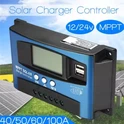
Bifacial solar panels capture direct and reflected light, generating 25% more power than monofacial systems
LiFePO4 battery storage provides 5,000+ cycle durability with 95% depth of discharge capability
Optical Efficiency Innovations
Advanced light distribution systems maximize usable lumens:
Freeform TIR Optics
Total internal reflection lenses achieve 92% efficiency with precise batwing distributions that minimize light trespass
Micro-structured Light Guides
Etched polycarbonate panels create uniform illumination with <3% luminance variation across road surfaces
Smart Control Revolution
Network Architectures
Communication protocols enable city-scale management:
LoRaWAN networks provide 10km range with 10-year battery life for remote devices
Bluetooth Mesh enables peer-to-peer control with 0.1s response times for critical commands
Predictive Maintenance
AI-driven systems anticipate failures before they occur:
Thermal imaging sensors detect failing drivers through temperature anomalies with 92% accuracy
Current signature analysis identifies LED degradation patterns 6-8 months before visible failure
Case Study: Shenzhen Smart Lighting Project
Shenzhen's city-wide LED conversion installed 160,000 intelligent luminaires featuring:
Adaptive group control adjusting brightness based on real-time traffic flow data
Fault current monitoring identifying cable degradation before failures
The project achieved 65% energy reduction and 76% maintenance cost reduction while extending luminaire lifespan to 12.7 years
Future Technology Horizon
Perovskite LED (PeLED)
Next-generation emitters promise 250+ lm/W efficacy with solution-processable manufacturing that could reduce production costs by 80%
Vehicle-to-Grid Integration
Street lights with integrated EV chargers enable bidirectional energy flow, using electric vehicle batteries for peak shaving during high-demand periods
Li-Fi Communication
Visible light communication technology embedded in street lights delivers 10Gbps wireless connectivity while illuminating streets
Power Your Smart City Projects with Hydget
Discover our integrated solutions for next-generation street lighting infrastructure