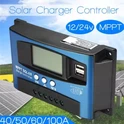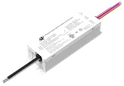


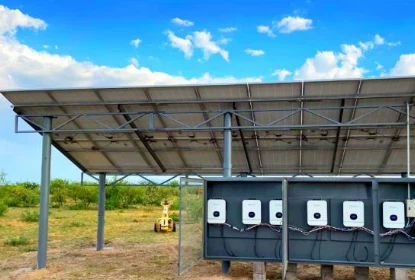
The off-grid photovoltaic power generation system consists of a photovoltaic array, solar controller, inverter, battery pack, and loads. The photovoltaic array converts solar energy into electrical energy, which is then used to charge the battery pack through the controller, and subsequently supplies power to the loads via the inverter. The addition of a battery between the photovoltaic array and the inverter results in many changes in the direction of current flow and equipment selection.

Does Photovoltaic Power Generation Have to Go Through Batteries Before Supplying Loads?
When current enters a battery and then discharges, there is a certain amount of loss, and this can impact the lifespan of the battery. So, does the inverter have a function that allows current to go directly to the load without passing through the battery for charging and discharging? This process can be realized, but it is not done by the inverter; instead, it is achieved through the automatic operation of the circuit.
From the perspective of circuit principles, current can only flow in one direction at any given moment. This means that at any one time, a battery can either be charging or discharging, but it cannot do both simultaneously. Therefore, when the solar power is greater than the load power, the battery is in a charging state, and all the energy is provided to the load directly from the photovoltaic array. Conversely, when the solar power is less than the load power, the battery is in a discharging state, and all the photovoltaic generation is supplied directly to the load without passing through the battery.
Calculation of Battery Charging Current
The maximum charging current of a battery is determined by three factors: first, the maximum charging current of the inverter; second, the insufficient power of the photovoltaic components; and third, the maximum charging current allowed by the battery.
Under normal circumstances, the charging current of the battery can be calculated as:

For example, if the component power is 5.4 kW, the controller efficiency is 0.96, and the battery voltage is 48V, then the maximum charging current would be:

When charging from the grid, the charging current is typically based on the inverter's maximum charging current. If the inverter's maximum charging current is 100A, this will limit the current to 100A.
Now, considering the maximum charging current of the battery: standard lead-acid batteries typically have a charging current limit of 0.2C. For instance, a 12V 200AH battery can have a maximum charging current of:

Thus, to meet the 100A current requirement, you would need to connect three of these batteries in parallel. Currently, there are also lithium batteries available with a 48V 100A version that can be chosen as well.
Calculation of Discharge Current
The maximum discharge current of a battery is also determined by three factors: first, the maximum discharge current of the inverter; second, the load being too small; and third, the maximum discharge current allowed by the battery.
Under normal circumstances, the discharge current of the battery is determined by the load. The discharge current of the battery can be calculated as:
Discharge Current=Load PowerBattery Voltage×Inverter EfficiencyDischarge Current=Battery VoltageLoad Power×Inverter Efficiency
For example, if the load power is 3 kW, the battery voltage is 48V, and the inverter efficiency is 0.96, then the maximum discharge current would be:
Max Discharge Current=300048×0.96=60AMax Discharge Current=48×0.963000=60A
It is important to note that the charging and discharging capacities of the battery may not be the same. Some lead-carbon batteries can support discharge currents of up to 1C.
In a properly functioning solar energy storage system, if there is sunlight, the battery's current may not be calculated using the formula above, since the battery current could be lower due to the possibility of both the photovoltaic array and the battery supplying power to the load simultaneously.
Design of Battery Cables
Off-grid inverters typically have overload capabilities. For example, a 3 kW off-grid inverter can support the startup of a 1 kW motor, with a maximum startup instantaneous power that can reach up to 6 kW. Some people believe that this instantaneous power must be provided externally to the inverter; however, the energy for such brief durations (milliseconds) cannot be supplied by either the photovoltaic array or the battery. Instead, the inverter itself can provide this power due to internal energy storage components-capacitors and inductors-that are capable of delivering instantaneous power.
Both the charging and discharging of the battery use the same cable, so when designing the cable, it is important to calculate the actual charging and discharging currents. The higher of the two should be selected. For example, consider a 5 kW inverter paired with a 4 kW solar array and a 3 kW load, with a 48V 600AH battery. If the maximum charging current of the inverter is 120A, the maximum charging current from the photovoltaic array is 80A, and the maximum discharging current of the battery under load conditions is 65A.
If the inverter does not support simultaneous charging from both the photovoltaic array and the grid, the cable should be sized for 80A, using a 16 mm² cable.
If simultaneous charging from the photovoltaic array and the grid is supported, the current can reach 120A, in which case a 25 mm² cable should be used.
Summary
When the output power of the photovoltaic system is comparable to or slightly greater than the load power, the photovoltaic current can be supplied directly to the load without passing through the battery, resulting in the highest efficiency for the off-grid system. However, when photovoltaic generation and load usage do not occur at the same time-for example, when photovoltaic power is generated during the day and the load consumes electricity at night-the photovoltaic output must first go into the battery before supplying the load, leading to lower efficiency in the off-grid system.
The design of battery cables should be based on the maximum charging and discharging currents of the battery. The current for the same inverter can vary across different applications, necessitating distinct calculations for each scenario.
You can browse the relevant product links in our website for more information.
HYGDET SOLAR PRODUCTS
Welcome to contact us
Contact: Ricky Li
Whatsapp: +86 152 5199 6760
Wechat: +86 152 5199 6760
Email: rickyli@hydget.com