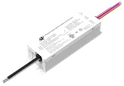


Solar inverters are an indispensable component of solar power generation systems. They are a type of power conversion device primarily responsible for converting the direct current (DC) generated by solar photovoltaic (PV) panels into alternating current (AC) to meet the electricity needs of homes, industries, and businesses.
Solar inverters are mainly classified into three types: off-grid inverters, grid-tied inverters, and hybrid inverters. Each type of solar inverter has its characteristics, advantages, and applicable scenarios. To choose the right solar inverter for one's needs, it is essential to understand the functions and features of these three types of solar inverters.
Off-Grid Inverters
Off-grid inverters are designed specifically for off-grid solar power systems, converting DC electricity into AC for powering loads.
The characteristic of an off-grid inverter is its ability to stably output AC electricity and store excess energy for later use. The advantage of off-grid inverters is that they are suitable for remote areas or places not connected to the power grid, providing reliable power supply.
Off-grid inverters are generally suitable for remote areas or places without grid electricity, such as mountains, deserts, islands, etc. They can provide reliable power supply for these regions, meeting basic living and working needs. Off-grid inverters can also serve as backup power sources to deal with sudden power outages or disaster situations.
Grid-Tied Inverters
Grid-tied inverters are designed to convert the DC electricity generated by solar panels into AC electricity and can connect to the power grid. They allow the electricity generated by the solar power system to be fed back into the public grid, achieving interconnection with the grid.
The characteristics of grid-tied inverters include grid monitoring and protection functions, ensuring safe and reliable grid-connected generation. The advantage of grid-tied inverters is that they allow surplus solar energy to be sold back to the grid, achieving bi-directional electricity flow. They can also draw power from the grid when solar generation is insufficient.
Grid-tied inverters are suitable for areas with grid electricity, where electricity can be sold back to the grid for economic benefits. They are applicable for both residential and commercial use. For example, rural households can sell excess electricity to the grid, achieving self-sufficiency, energy savings, and economic gains. Businesses can also sell electricity to the grid to generate income and reduce energy costs and environmental pollution.
Hybrid Inverters
Hybrid inverters are those that combine the functions of both off-grid and grid-tied inverters. They can convert the DC electricity generated by solar panels into AC for use, while also converting grid electricity into DC for storage, allowing for switching between off-grid and grid-tied operating modes.
The features of hybrid inverters include bi-directional current flow capabilities, allowing for mutual supplementation and switching between solar energy and grid power to meet different load demands. They achieve self-consumption and surplus electricity feed-in, maximizing the use of photovoltaic generation.
The advantage of hybrid inverters is that they can provide dual power supply from both solar energy and the grid when grid electricity is available, enhancing energy utilization efficiency. Additionally, they can provide backup power during outages through their storage capabilities.
Hybrid inverters are suitable for areas with unstable electricity supply, where their storage function can provide stable power supply, ensuring the normal operation of load equipment. For example, rural households can use stored surplus electricity to be sold back to the grid, ensuring their own power supply while also earning income.