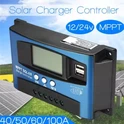

With 640 million Africans lacking electricity-86% of the global unelectrified population-the continent faces both an urgent energy crisis and a $2.9 billion distribution infrastructure opportunity. As nations race to modernize grids and integrate renewables, understanding Africa's power landscape is key for global suppliers. Here's how smart investments can electrify growth.
⚡ 1. The Grid Deficit: Where Africa Stands Today
Africa's grid infrastructure is a patchwork of aging assets, underinvestment, and uneven access:
Access Inequality:
While urban centers like Nairobi or Cairo enjoy >90% electrification, rural Sub-Saharan Africa languishes at <20% access rates. Uganda's national electrification rate is just 47%, typical of many low-income countries.
Reliability Crisis:
Even grid-connected areas suffer daily outages. In Kenya, businesses lose $1.3 billion/year due to blackouts, forcing reliance on diesel generators.
Transmission Gaps:
Grid losses exceed 15–25% in countries like Nigeria due to outdated lines and technical inefficiencies.
Case in point: Uganda's new Mbale-Bulambuli-Kween transmission line (backed by UK's Gridworks) will unlock 250 MW of renewable power-addressing both access and stability for 80,000+ people.
🔌 2. Grid Modernization: Key Investment Areas
2.1 Transmission & Distribution (T&D) Infrastructure
High-Voltage Lines:
Critical for interconnecting regional power pools (e.g., East Africa's 220kV backbone). Demand grows at 4.5% CAGR, with the market hitting $2.9B by 2032.
Smart Grid Tech:
IoT-enabled sensors (e.g., Wasion's transparent distribution systems) reduce outage times by 40% through real-time fault detection.
2.2 Decentralized Solutions: Mini-Grids Take Center Stage
Mini-grids now power 127,424 African households-a 1,070% surge since 2014. Their success hinges on:
Solar-Diesel Hybrids: Dominant in Nigeria (56 sites), cutting fuel costs by 35% while ensuring 24/7 supply.
Mesh Grids: Okra Solar's tech slashes connection costs by 30% in low-density areas like rural Kenya.
2.3 Grid-Forming Technologies
With renewables projected to supply 43% of Africa's power by 2030 (up from 27%), these are non-negotiable:
Battery Storage:
Solar-hydrogen hybrids in South Africa deliver 72-hour backup, crucial for farms and hospitals.
Smart Inverters:
Must comply with IEEE 1547-2028 for blackout-resistant microgrids.
🌍 3. Regional Spotlight: Where the Demand Is
| Region | Priority Projects | Hydget-Relevant Equipment |
|---|---|---|
| West Africa | Nigeria's "DARES" mini-grids (170 sites) | Solar inverters, smart meters, LV panels |
| East Africa | Kenya-Tanzania cross-border grid | HV transformers, SCADA systems |
| Southern Africa | South Africa's grid upgrades ($300B fund) | SF6-free switchgear, IoT sensors |
Game-changer: The Africa Continental Grid will link Europe via Morocco-Spain interconnectors and Asia via Egypt-Jordan lines-creating a $50B intercontinental market.
🛠️ 4. Equipment Gaps: What Africa Needs Now
Suppliers must prioritize:
Climate-Resilient Gear:
Anti-corrosion LV panels (e.g., Zhejiang Switchgear's port-grade systems) and desert-proof solar trackers.
Dual-Standard Compliance:
Products certified for both IEC (global) and ANSI/IEEE (US-backed projects).
Cost-Effective Substations:
Prefabricated units like Ethiopia's 35kV containerized stations, cutting deployment time by 60%.
💡 5. The Chinese Advantage: Quality Meets Affordability
Chinese manufacturers dominate Africa's power equipment sector by delivering:
30–50% Cost Savings:
Robotic production (
25/hourlaborvs.25/hour labor vs. 25/hourlaborvs.
65 in EU) and localized supply chains (e.g., Yangtze Delta industrial clusters).
Africa-Proven Tech:
Trina Solar's bifacial panels withstand Sahara sandstorms (IP68), while BYD EVs thrive in Nairobi's taxi fleets.
Financing Partnerships:
Kenya's M-KOPA model lets communities co-own mini-grids with 10% equity-boosting project adoption.
⚠️ 6. Navigating Challenges: Risks & Solutions
| Challenge | Mitigation Strategy |
|---|---|
| Financing Delays | Partner with DFIs (e.g., World Bank's $5B fund) |
| Policy Fragmentation | Advocate for ECOWAS's unified grid standards |
| Supply Chain Risks | Stock regional warehouses (e.g., Dar es Salaam) |
💎 Conclusion: Power Africa's Future with Hydget
Africa's grid expansion isn't just about cables and substations-it's about enabling economic liberation. Hydget bridges Chinese engineering excellence with African realities, offering:
ANSI/IEC-Certified Gear: From smart meters to HV breakers.
Turnkey Solutions: Design, compliance, and logistics support.
ESG-Aligned Partnerships: Solar-hybrid systems cutting diesel use by 75%.