
As Southeast Asia's largest economy, Indonesia faces an unprecedented energy challenge: Peak electricity demand will quadruple by 2050, fueled by urbanization, industrial growth, and a population nearing 300 million. Yet grid losses exceed 25% in regions like Nigeria, and 600 million Africans lack reliable power-a gap Indonesia aims to close through aggressive renewables deployment and grid modernization. For global suppliers, this translates to a $2.9 billion equipment opportunity. Here's how to capture it.
⚡ 1. Indonesia's Electricity Demand: Urban Boom vs. Rural Access Gaps
1.1 Consumption Hotspots
Industrial Dominance: Manufacturing hubs in Java (60% of national consumption) drive demand for HV transformers and smart switchgear. Metal, chemical, and textile sectors alone will push industrial electricity use to 80 TWh by 2030.
Household Surge: Rising AC/EV adoption will spike residential demand to 350 TWh, requiring distribution transformers (11kV–33kV) with IP65-rated enclosures for humid climates.
EV Infrastructure: Jakarta's 8,000 MW peak load leaves a 3,000 MW surplus-enough to power 500,000 EVs. But charging stations remain scarce, creating demand for modular substations and fast-charging systems.
1.2 Regional Disparities
| Region | Electrification Priority | Hydget-Relevant Equipment |
|---|---|---|
| Java | Grid stability for factories | SF6-free switchgear, IoT sensors |
| Papua | Rural mini-grid expansion | Solar-hybrid inverters, lead-acid batteries |
| Sumatra | Cross-border power pools | 220kV+ transformers, SCADA systems |
Case: The Morotai Island microgrid uses solar PV + 2,700-kWh lead-acid storage to electrify remote communities-a model replicable across 17,000 islands.
🔌 2. Grid Modernization: Bridging the $2.9B Infrastructure Gap
2.1 Transmission & Distribution (T&D)
HV Line Upgrades: 2,000+ units needed for the West African Power Pool (WAPP), with similar projects in Sumatra/Kalimantan.
Smart Grid Tech: IoT sensors (e.g., Wasion's systems) cut outage times by 40%-critical for Jakarta's MRT and Commuterline networks.
2.2 Decentralized Solutions
Mini-Grids: 127,424+ African households powered-a model for Indonesian villages. Requires solar-diesel hybrids and deep-cycle batteries.
Floating Solar: The 192 MW Cirata FPV plant (Southeast Asia's largest) reduces coal use by 117,000 tons/year. Scalable to 29 GW by 2030.
2.3 Coal Phaseout & Renewables Push
Policy Shift: Indonesia will retire coal plants by 2040 and target 44% renewables by 2030.
Geothermal Potential: 29 GW untapped (only 4% utilized)-demanding steam turbines and high-temperature cables.
🏭 3. High-Demand Equipment: What Indonesia Needs Now
| Category | Key Products | Technical Specs |
|---|---|---|
| Transformers | 33kV distribution units | Dual-winding design (11kV/33kV input), epoxy resin coating |
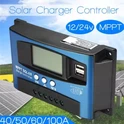
| Solar Components | Inverters, trackers | IEC 62109 certification, IP68 rating for tropical storms |
| Storage | Lead-acid batteries | 2,700+ kWh capacity, 10-year lifespan |
| Switchgear | LV panels | ANSI/IEC dual-standard, arc-flash protection |
Procurement Tip: Prioritize IEC 60076 (transformers) and ANSI C57.12.00 certifications for World Bank-funded projects.
🌏 4. Why Source from China? Cost, Speed & Compliance
30–50% Cost Savings: Robotic production (
25/hourlaborvs.25/hour labor vs. 25/hourlaborvs.
65 in EU) and gigawatt-scale factories.
Africa-Proven Resilience: Trina's bifacial panels withstand 60°C heat-ideal for Sumatra.
Certification Edge: Unified IEC/UL/ANSI testing at Shanghai labs (20% cheaper than multi-region audits).
⚠️ 5. Navigating Challenges: A Supplier's Checklist
Policy Risk: Advocate for ECOWAS-style unified standards to counter fragmentation.
Climate Adaptation: Specify class H insulation (180°C rating) for Sahel-like heat in Java.
After-Sales: Stock spare parts in Jakarta/Bali warehouses for 48h delivery.
💎 Conclusion: Power Indonesia's Future with Hydget
Indonesia's energy transition isn't just about megawatts-it's about enabling equitable growth. Hydget delivers:
ANSI/IEC-Certified Gear: From geothermal turbines to EV charging modules.
Turnkey Logistics: Doorstep delivery to Surabaya/Batam ports.
ESG Alignment: Carbon-neutral shipping via Maersk ECO Delivery.