

Advantages, Disadvantages and Performance Analysis of Copper and Aluminum Transformers
Electricity is the nerve center and source of power for modern society and economic work. In recent years, with the rapid development of my country's economic construction, the power industry has made great progress, and people from all walks of life have increasingly paid attention to the development of my country's power industry. Under the new situation at that time, my country has continuously put forward new corresponding requirements for the relevant technical guidelines and standards for the stability of power grids and the planning and construction of power grids.
However, due to the different recognition and understanding of the principle of "power work safety first" by some transformer manufacturers, there are often many inherent safety hazards in the early planning and construction of power grids in reality, which are inevitable. This has an irreversible consequence on the long-term stability of the power grid and its sustainable development.
This article only objectively expounds the advantages and disadvantages of "replacing copper with aluminum" in transformers from the perspective of authoritative experts, and makes a detailed analysis of the "reliability of copper-aluminum transformers" for readers.
My opinion on the reliability analysis of copper-aluminum transformers
At present, most of the transformer windings of domestic power transformer manufacturers use copper wire or copper foil, but some also use aluminum wire or aluminum foil. There are also many debates about the advantages and disadvantages of copper wire transformers and aluminum wire transformers. Industry insiders pointed out that aluminum wire transformers are already a common practice abroad, and the embarrassment faced by China is only due to the long-term concept of "aluminum is not as good as copper". For this reason, the promotion of "aluminum instead of copper" transformers in China faces many problems.
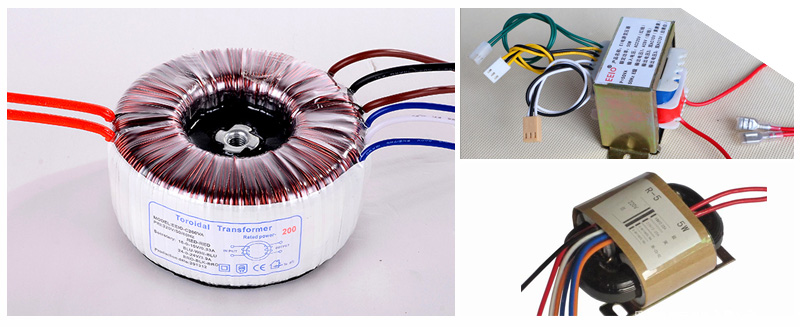
In fact, it is not new to use aluminum wire for power transformer windings. As early as the 1970s and 1980s, domestic transformer manufacturers were using aluminum wire or aluminum foil to wind coils. Because my country's copper resources were quite scarce at that time, the price of copper was very high, which increased the production cost. In order to reduce the production cost and facilitate supply, "aluminum instead of copper" had to be used to produce transformers. At that time, it was just a measure that had to be adopted under unfavorable circumstances.
By the 1990s, the supply of copper returned to normal, the price of copper also dropped, and the cost of using copper to produce transformers also dropped. Domestic power transformer manufacturers resumed using copper to produce transformers.
Advantages and disadvantages of copper-aluminum transformers
What are the differences between copper wire transformers and aluminum wire transformers:
Comments on copper wire transformers: Copper wires have low resistivity, so they have good electrical conductivity, good thermal conductivity, higher mechanical strength than aluminum wires, better tensile properties than aluminum wires, and higher melting points than aluminum wires, so they have strong short-circuit resistance. Because copper wires have low resistivity and good electrical conductivity, it is easier to produce energy-saving transformers that meet energy efficiency standards; while aluminum wire transformers must increase the wire cross-section to increase the transformer volume in order to meet energy efficiency standards.
Comments on aluminum wire transformers: The conductive performance is worse than that of copper wire, the melting point is low, the short circuit resistance is poor, the mechanical strength is worse than that of copper wire, the wire is easy to break, the ability to withstand sudden short circuits is poor, the thermal stability is poor, the impact resistance is poor, the aluminum wire transformer welding joint is easily burned under the action of lightning impact and current, and the aluminum material is easy to oxidize and corrode. The lead wire welding process of the aluminum wire transformer is relatively complicated, the connection is easy to disconnect after a violent shock, and the connection is prone to chemical reactions after long-term operation, resulting in an increase in resistivity and local overheating. Under the same capacity, the volume of the aluminum wire transformer is larger than that of the copper wire transformer. However, compared with the copper wire transformer of the same capacity, the aluminum wire has a lower cost and lighter weight.
How to distinguish copper-aluminum transformers
How to correctly distinguish whether it is a copper wire transformer or an aluminum wire transformer:
According to national standards, you can check the dimensions, weight and other parameters of the relevant transformer to confirm. Since the height of aluminum wire transformer is higher than that of copper wire transformer and its weight is lighter than that of copper wire transformer. If you have professional knowledge of transformer, you can also confirm it by measuring the no-load loss and load loss of transformer. The no-load loss of aluminum wire transformer is generally greater than that of copper wire transformer, and the load loss is also greater than that of copper wire transformer. The temperature rise of aluminum wire transformer is also higher than that of copper wire transformer.
Looking at the above analysis, users can decide whether to purchase aluminum wire transformer or copper wire transformer according to the application conditions and occasions.
As we all know, electricity, as a basic industry for the development of the national economy, has been closely related to economic and social development, improvement of people's lives, etc., involving the development and stability of the entire society. The important role and significance of safe production of power enterprises are increasingly prominent. At the same time, the characteristics of power production are high automation and simultaneous production, supply and sales. Many power plants, transmission lines, substations and power equipment form a power grid to work together, requiring their equipment to have extremely high reliability.
Although transformer manufacturing companies can produce copper wire transformers or aluminum wire transformers according to their own objective conditions, some companies blindly reduce costs during the production process, fail to strictly follow the design requirements, and adopt the method of using inferior products and cutting corners to produce products, obtain improper benefits, and increase the potential safety hazards of power projects. Once an accident occurs, it will have a direct impact on the national economy, national defense construction and people's lives, and even endanger the lives of citizens. Therefore, power production must implement the policy of "safety first".
It is worth mentioning that both transformer manufacturers and users should keep up with the pace of technological development, look to the long term, and take responsibility. In the final analysis, the focus of users choosing transformer products is not only on low prices, but more importantly on - high quality! On - genuine goods at a fair price!