

Concrete water reducing agent is an additive used to improve the fluidity and workability of concrete. Water-reducing admixtures can significantly reduce the amount of water required in concrete production while maintaining or improving its strength and stability. Its main types of water reducing agents include plasticizers and high-efficiency water reducing agents (superplasticizers). Plasticizers can reduce the water-cement ratio of concrete, usually by about 5% to 10%. Superplasticizers, also known as superplasticizers, can reduce even more moisture, usually between 12% and 40%, depending on the specific product and usage conditions.
The mechanism of action of these water reducing agents is mainly to improve the dispersion of cement particles through their surfactant properties. At the microscopic level, water-reducing agent molecules are adsorbed on the surface of cement particles and prevent cement particles from aggregating through electrostatic repulsion or steric hindrance, thereby improving the fluidity and uniformity of concrete. For example, polycarboxylate (PCE) type water reducing agents interact with cement particles through their side chains, enhancing the dispersion effect and effectively reducing the agglomeration of cement particles.
The use of superplasticizers can also increase the early and final compressive strength of concrete, reduce permeability, increase durability, and in some cases, improve the pumpability and surface treatment properties of concrete. This is because better dispersion of cement particles increases the efficiency of the cement's hydration reaction, resulting in a denser concrete structure. Concrete water-reducing admixtures optimize various properties of concrete through physical and chemical action mechanisms, allowing them to play a key role in modern construction and engineering applications.
The action mechanism of concrete water-reducing admixtures involves complex chemical and physical processes, mainly by improving the dispersion of cement particles to reduce the water-cement ratio, while maintaining or enhancing the fluidity and mechanical strength of concrete. The active ingredients in water reducing agents are usually synthetic polymers with high molecular weight, such as polycarboxylic acid (PCE), which adsorb on the surface of cement particles and reduce the attraction between particles, thereby improving the workability of concrete and reducing water loss. need.
Water reducing agents can effectively improve the dispersion of cement particles, mainly because they form monomolecular layers on the surface of cement particles. These molecular layers interact with ions on the surface of cement particles through their polar groups, making the particles negatively charged. This prevents particle aggregation through charge repulsion and steric hindrance effects. Polycarboxylate superplasticizers form three-dimensional barriers on the surface of cement particles through their side chains to prevent close contact between particles, thereby greatly enhancing the fluidity and stability of concrete.
The polycarboxylate high-efficiency water-reducing agent independently developed by Borida Company is a new generation of water-reducing agent with advanced technical characteristics. This kind of water-reducing agent not only consumes low energy during the production process, but also contains no formaldehyde and does not produce production waste. It is a truly energy-saving and environmentally friendly product. Its main technical indicators are in a leading position at home and abroad, and it has multiple advantages such as high water reduction rate, excellent slump retention, collective retardation and early strength enhancement.
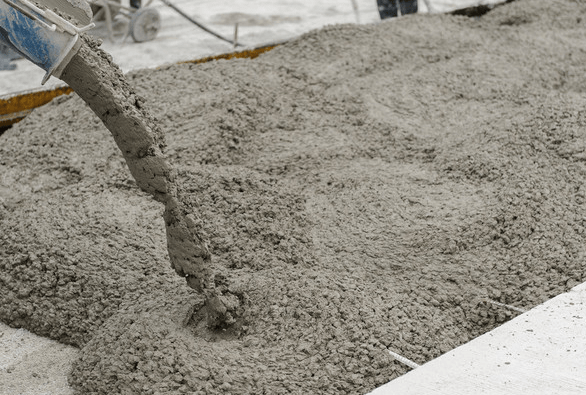
In addition, Borida's polycarboxylate superplasticizer is particularly suitable for various large-scale infrastructure projects, such as roads, railways, bridges, water conservancy, electric power and tunnel projects. This water reducing agent can significantly improve the workability and durability of concrete while optimizing the cost-effectiveness and construction process of concrete. The use of this high-efficiency water-reducing agent can effectively improve the fluidity of concrete, reduce the amount of cement, and at the same time ensure the strength and stability of the concrete structure, thereby extending its service life.
In practical applications, the use of Borida's polycarboxylate high-efficiency water-reducing agent can achieve more precise concrete proportions, improve construction efficiency, and reduce environmental impact, which is in line with the current construction industry's pursuit of high-performance, environmentally friendly materials. Through this mechanism, water reducing agents not only play an important role in reducing costs and improving economic benefits, but also provide important contributions to environmental protection and sustainable development. Reducing the amount of cement and improving the performance of concrete can help reduce carbon emissions and resource consumption, which has far-reaching significance for the green transformation and sustainable development of the construction industry.
You can browse the relevant product links in our website for more information.
Welcome to contact us
Contact: Ricky Li
Whatsapp: +86 152 5199 6760
Wechat: +86 152 5199 6760
Email: rickyli@hydget.com