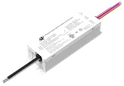


The working principle of distribution transformers is based on the law of electromagnetic induction. When the high-voltage side winding is powered on, the generated magnetic field induces the electromotive force in the low-voltage side winding, thereby reducing or increasing the voltage. Distribution transformers usually consist of high-voltage windings, low-voltage windings, iron cores and cooling systems. The function of the iron core is to conduct the magnetic field, while the cooling system is used to dissipate heat to ensure the normal operation of the transformer.
The main functions of distribution transformers include:
Voltage conversion: Converting high-voltage power on transmission lines into low-voltage power suitable for powering buildings and equipment.
Power distribution: It plays the role of distributing power and controlling power loads in the power grid to ensure that each user can receive stable power supply.
Voltage regulation: Adjust the output voltage to meet the voltage stability requirements of different devices and systems.
Insulation protection: Protecting electrical systems from hazards such as electric shock and short circuits through insulating materials and designs.
In addition to the above functions, distribution transformers can also be customized and designed according to specific needs to adapt to different application scenarios. For example, some transformers are fireproof, explosion-proof, and moisture-proof to ensure reliable operation in harsh environments.
In modern power systems, distribution transformers play a vital role in providing stable and safe power supply for various electrical equipment. With the development of smart grid and renewable energy, the design and application of distribution transformers are constantly innovating to adapt to the needs of future energy systems.